Welcome to the 16p11.2 Genetic Foundation
Our mission is to treat and integrate 16p11.2 Genetic Variants seamlessly throughout the health, education and societal landscapes by 2030. We do it for our children.
$16 a month. A lasting impact for the 16p community.
Every family touched by 16p11.2 deserves answers, expert care, and a community that understands. The Sweet 16 Club is a group of monthly supporters who make that possible, $16 at a time.
For just $16 a month, you can help advance research, expand access to specialized care, advocate for families, and provide trusted resources for the 16p community.
As a member, you’ll receive early access to newsletters, webinars, resources, and future Foundation discounts. Ready to make a difference?
The 16p11.2 Genetic Foundation is dedicated to supporting individuals and families affected by 16p11.2 genetic variants through evidence-based guidance, education, and a strong sense of community. We bring families together through the love we share for our children, fostering inclusivity, vulnerability, and acceptance while recognizing and elevating the strengths and resources within our community. Our commitment to care includes partnering with scientists to drive innovative discoveries and develop effective treatments as well as collaborating with clinicians to build centers of excellence that provide coordinated, high-quality care.

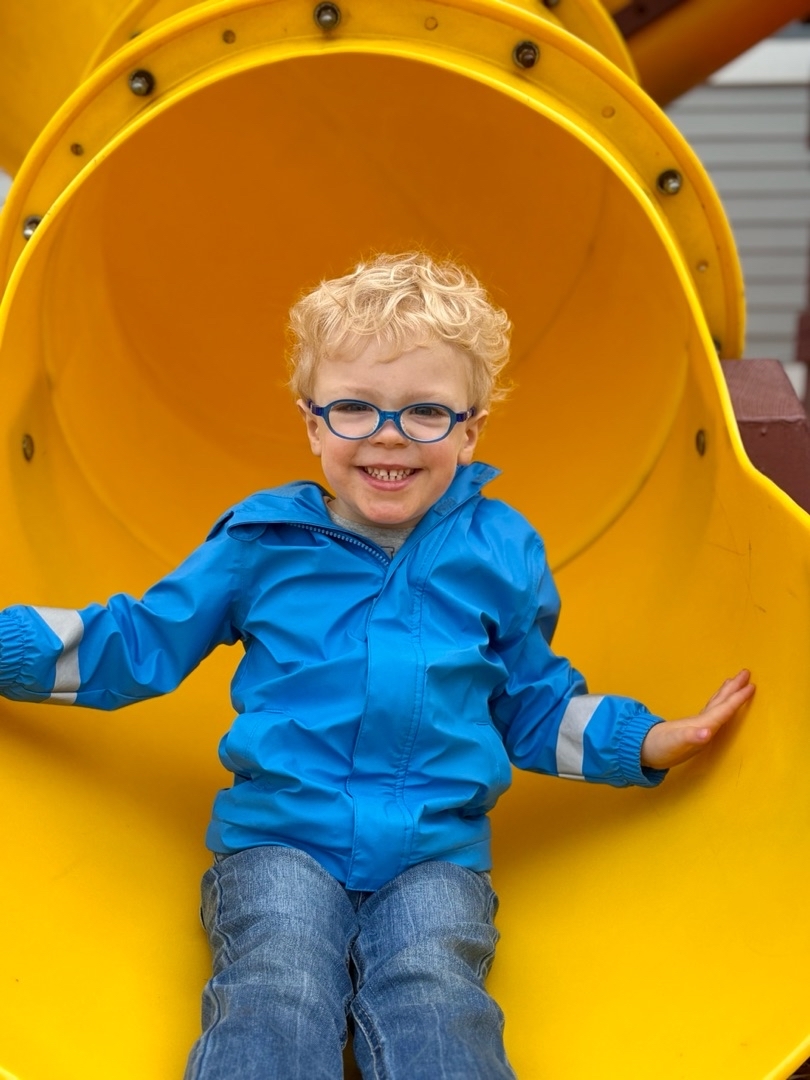
Get Involved

Donate
Your tax-deductible donation helps bring our mission to life and directly supports families and individuals affected by 16p11.2 genetic variants.
Make a Contribution
Subscribe
Sign up for our newsletter to access specialized resources, timely updates, and meaningful community connections. We’re here to guide you toward the most relevant information in science and medicine, helping you navigate your 16p11.2 journey with confidence.
Sign Up

Join the conversation
Join our Facebook group to connect in real time, share lived experiences and learn alongside other families. Together, we can combine the strength of our community to support one another and advance care for everyone affected by 16p11.2 genetic variants.
Our Facebook Community
Volunteer
The Foundation is a parent-led nonprofit organization, and volunteers are essential to achieving our mission. Please consider how your time, skills, and talents can help support our cause. Become part of a powerful community of parents striving for a better life for their children.
Learn More
What are 16p11.2 Genetic Variant Syndromes?
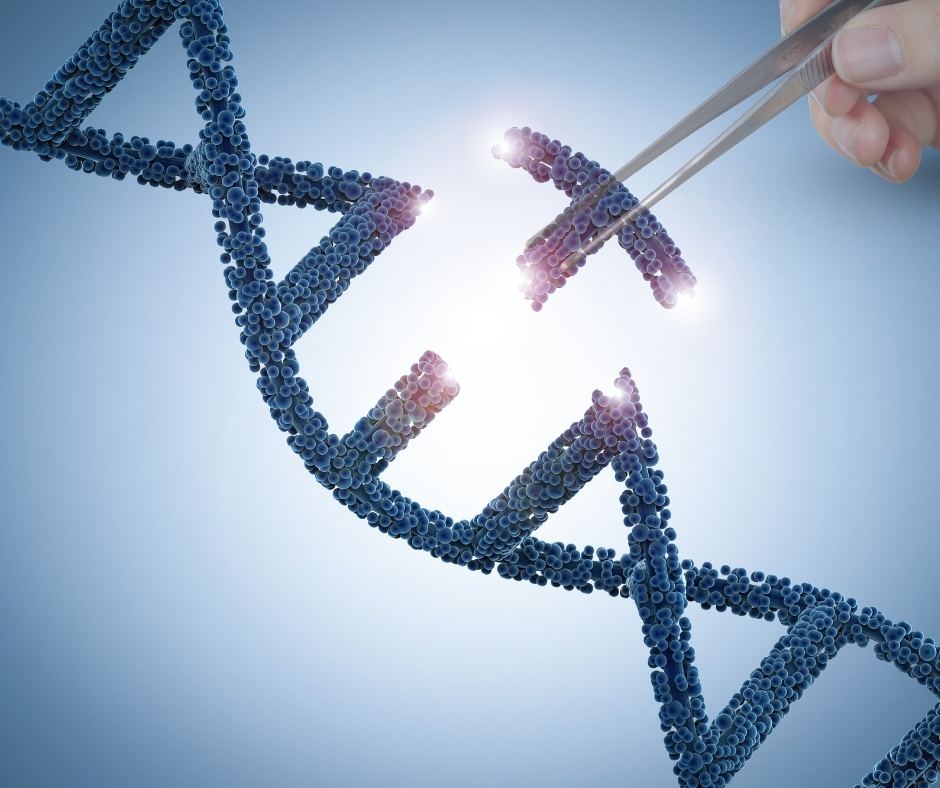
A 16p11.2 genetic variant occurs when a small section of one copy of the 16th chromosome is either deleted or duplicated on the short arm (p) at the 11.2 locus. The typical 16p11.2 Proximal Deletion removes up to 30 genes and is commonly associated with speech and language delays, autism spectrum disorder (ASD), attention-deficit/hyperactivity disorder (ADHD), developmental delays, low muscle tone (hypotonia), motor delays, obesity, seizures, and more.
In contrast, a 16p11.2 Proximal Duplication involves an extra segment of genetic material containing more than 25 genes. This duplication is linked to autism, developmental delay or intellectual disability, speech and language delays, constipation, low muscle tone, ADHD, anxiety, seizures, and additional medical or developmental challenges.
On the short arm of chromosome 16 at the 11.2 locus, several other genetic variants exist. These include what are often called distal deletions or distal duplications, as well as larger variants that may involve both proximal and distal regions. Although these forms are less common, we aim to support all individuals and families affected by variants in this region of chromosome 16.
Understanding these genetic variants is essential for providing informed support, appropriate care, and meaningful resources for individuals and their families.
How prevalent are 16p11.2 variants?
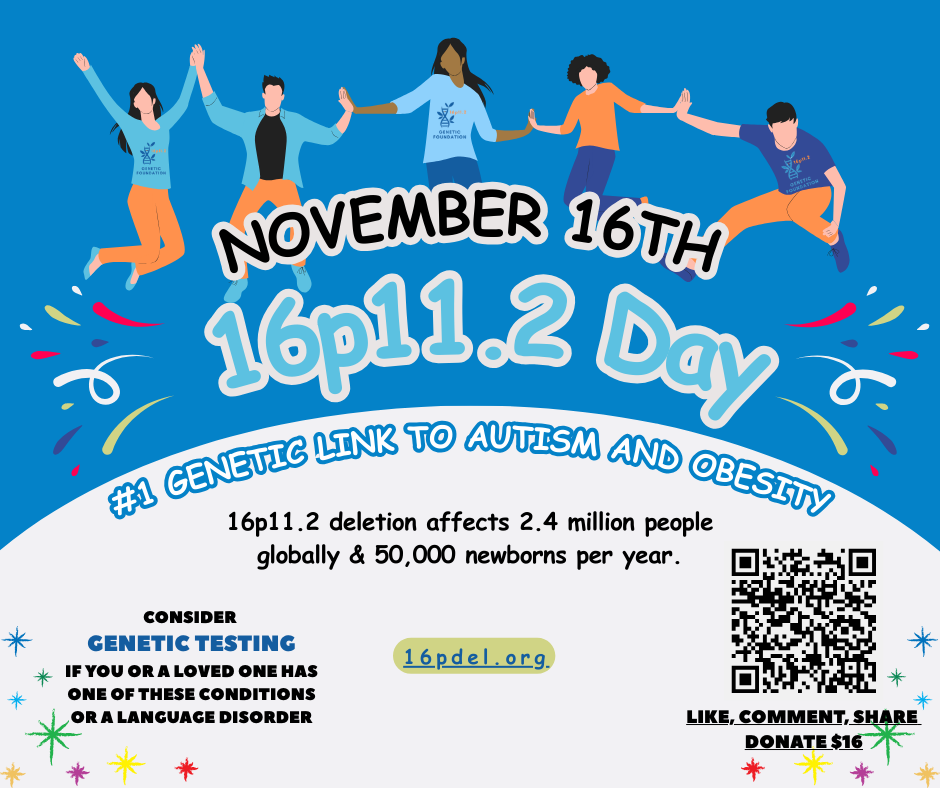
16p11.2 deletion is estimated to occur in approximately 3 out of every 10,000 births, with roughly 50,000 new cases each year and an estimated 3 million individuals affected worldwide. It is the most common known genetic link between autism and obesity, with effects that range from moderate to profoundly challenging.
16p11.2 duplication occurs at a similar frequency, affecting approximately 3 to 5 out of every 10,000 individuals worldwide. Because its features can be highly variable and sometimes subtle, many individuals are likely undiagnosed. Like the deletion, the duplication is associated with a broad range of neurodevelopmental, medical, and behavioral outcomes, with considerable variation in how individuals are affected.
We work toward meaningful change for our children through these four pillars.
Convene/Connect Foster millions affected by 16p11.2 variants to come together for education, support and care regularly.
Advance Research Connect patients with research from basic science to clinical trials of effective medications and multi-gene therapy. Conduct our own research.
Drive Better Care Create the 16p CARE Program: Clinical Advancement, Research, and Education that will not only develop and implement clinical care practices, but also serve to train other physicians.
Advocate for Policy Designated ICD code. Work with policy makers and industry to promote education and understanding of 16p11.2 variants to ease the acquisition of proper care and education for those affected.
What We’ve Been Up To